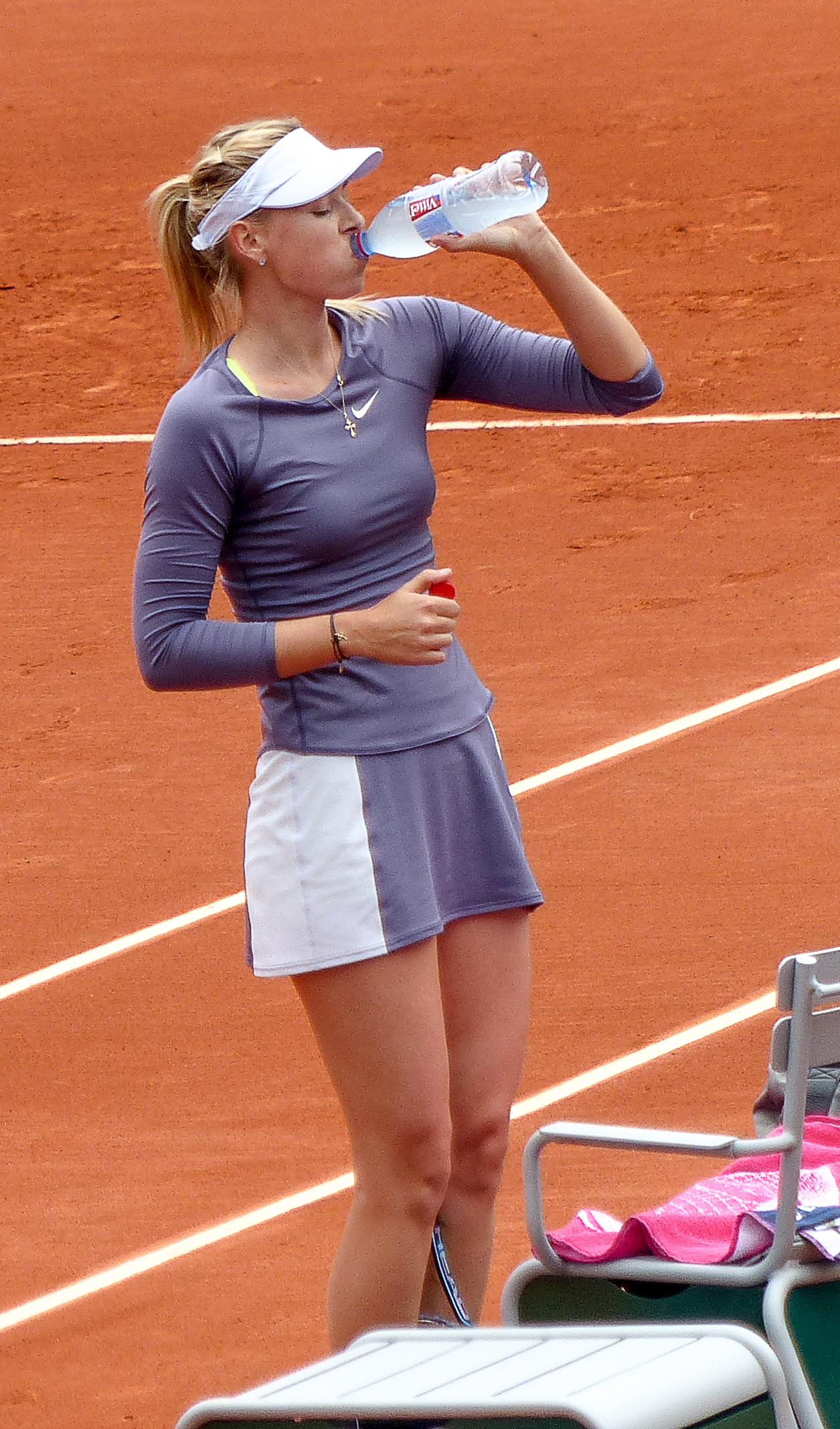
The Three Main Court Surfaces
Professional tennis is played on three major surfaces: clay, grass, and hard court. Each surface is used at different Grand Slam tournaments and has distinct characteristics that affect how the game is played.
| Surface | Grand Slam | Speed | Bounce | Best For |
|---|---|---|---|---|
| Clay | French Open (Roland Garros) | Slow | High, heavy | Baseline players, spin hitters |
| Grass | Wimbledon | Fast | Low, skidding | Serve-and-volley, flat hitters |
| Hard (Acrylic) | Australian Open, US Open | Medium | True, consistent | All-round players |
Clay Courts — The Red Surface
Clay courts are made from crushed brick, shale, or stone. The most famous are the red clay courts of Roland Garros (French Open) in Paris. The surface is slow — the ball loses significant speed after bouncing, and the high friction causes the ball to kick up heavily.
How Clay Affects the Game
- Slower rallies: Clay reduces ball speed significantly, leading to longer rallies with more groundstrokes.
- Higher bounce: The ball sits up after bouncing, giving players more time but also allowing opponents to set up and hit powerful shots.
- Heavy topspin is rewarded: Topspin grabs the clay and bounces even higher, making it very effective. Rafael Nadal's extreme topspin forehand (generating 3,000+ RPM) was virtually unplayable on clay.
- Foot sliding: Players slide into shots on clay (the surface allows this safely), enabling them to recover position after stretching for a ball.
- Stamina is key: Five-set matches on clay can last four or more hours. Physical endurance becomes a major factor.
- Serve is less dominant: Because the surface slows the ball, big servers have less advantage. Rallying ability becomes more important.
Famous Clay Court Players
- Rafael Nadal — 14 French Open titles, often called the "King of Clay"
- Björn Borg — 6 French Open titles
- Chris Evert — 7 French Open titles
- Maria Sharapova — 2 French Open titles (2012, 2014)
- Arantxa Sánchez Vicario — 3 French Open titles
Grass Courts — The Green Surface
Grass courts are the original tennis surface — tennis was first played on grass lawns in England in the 1870s. Today, Wimbledon in London is the only Grand Slam played on grass. Grass courts are fast: the ball stays low after bouncing and skids through quickly.
How Grass Affects the Game
- Fast ball speed: The low-friction surface allows the ball to skid through at high speed, giving opponents less time to react.
- Low bounce: The ball stays low after bouncing — particularly challenging for players who like high balls to hit with topspin.
- The serve is king: Big servers have a major advantage on grass. A powerful flat serve can be nearly impossible to return.
- Net play rewarded: The serve-and-volley style (serve, rush the net, put away the volley) was historically the dominant strategy. While less common today, approaching the net is still very effective.
- Topspin is less effective: Because the ball stays low, heavy topspin doesn't kick up as much. Flat and sliced shots tend to work better.
- Footwear matters: Special grass court shoes with a herringbone (but softer) sole are required to grip without damaging the surface.
Famous Grass Court Players
- Martina Navratilova — 9 Wimbledon singles titles
- Roger Federer — 8 Wimbledon singles titles
- Pete Sampras — 7 Wimbledon singles titles
- Steffi Graf — 7 Wimbledon singles titles
- Maria Sharapova — 1 Wimbledon title (2004)
Maria Sharapova's first Grand Slam title came at Wimbledon 2004, aged 17. On the fastest surface in tennis, she used her powerful serve and aggressive flat groundstrokes to defeat the reigning champion Serena Williams 6-1, 6-4 in the final. It remains one of the most celebrated Grand Slam victories in women's tennis history.
Hard Courts — The Acrylic Surface
Hard courts are the most common tennis surface worldwide. Made of concrete or asphalt topped with an acrylic coating, they offer a consistent, predictable bounce and medium pace. Both the Australian Open (in Melbourne) and the US Open (in New York) are played on hard courts — though each uses a different brand of surface with slightly different speed characteristics.
How Hard Court Affects the Game
- Consistent bounce: The ball bounces true to its angle every time — no surprises from uneven turf or compacted clay. This rewards well-executed technique.
- Medium pace: Neither as slow as clay nor as fast as grass. Both power players and defensive counter-punchers can be effective.
- Various speeds: Different hard courts have different pace ratings. The US Open's DecoTurf is faster; the Australian Open's GreenSet can vary. Tournament organizers can adjust the amount of sand in the acrylic coating to control ball speed.
- All-round game rewarded: Because there's no extreme bias toward power or defence, the most complete players tend to excel on hard courts.
- Physical toll: The hard surface is tough on the body — particularly joints. Many professional players have suffered from knee and back injuries related to extensive hard court play.
Australian Open vs US Open
- Australian Open (Plexicushion): Medium-pace surface in Melbourne. The hot Australian summer can cause balls to fly further, effectively speeding up the surface. Maria won here in 2008.
- US Open (DecoTurf): Faster hard court in New York. The American ball (Penn Championship) used here is slightly larger, which slows it slightly. Maria won here in 2006.
Indoor Courts
Many tournaments are played indoors — particularly in the autumn/winter months in Europe. Indoor courts are typically hard courts but feel significantly faster because there's no wind, the air is consistent, and the ball doesn't slow as much as it would outdoors in humid conditions. The WTA Finals (the season-ending championship event) is played indoors.
Choosing the Right Court for You
As a recreational player, the court you play on is often determined by what's available in your area, not what you choose. However, here's what to know:
- Just starting out? Hard courts or clay are ideal. Hard courts are consistent and everywhere; clay gives you more time to develop technique.
- Concerned about joints? Clay is the most forgiving surface on the body. Hard courts are the hardest on your knees and hips.
- Big serve? Grass or fast hard courts will reward you most.
- Like long rallies? Clay is your surface.
- Like playing at the net? Grass or indoor hard courts will feel natural.
Summary Comparison
| Feature | Clay | Grass | Hard |
|---|---|---|---|
| Speed | Slow | Fast | Medium |
| Bounce height | High | Low | Medium |
| Rally length | Long | Short | Medium |
| Serve importance | Medium | Very High | High |
| Topspin effectiveness | Very High | Low | Medium |
| Body stress | Low | Medium | High |
| Sliding ability | Yes | Somewhat | No |
| Grand Slam | French Open | Wimbledon | AO + US Open |