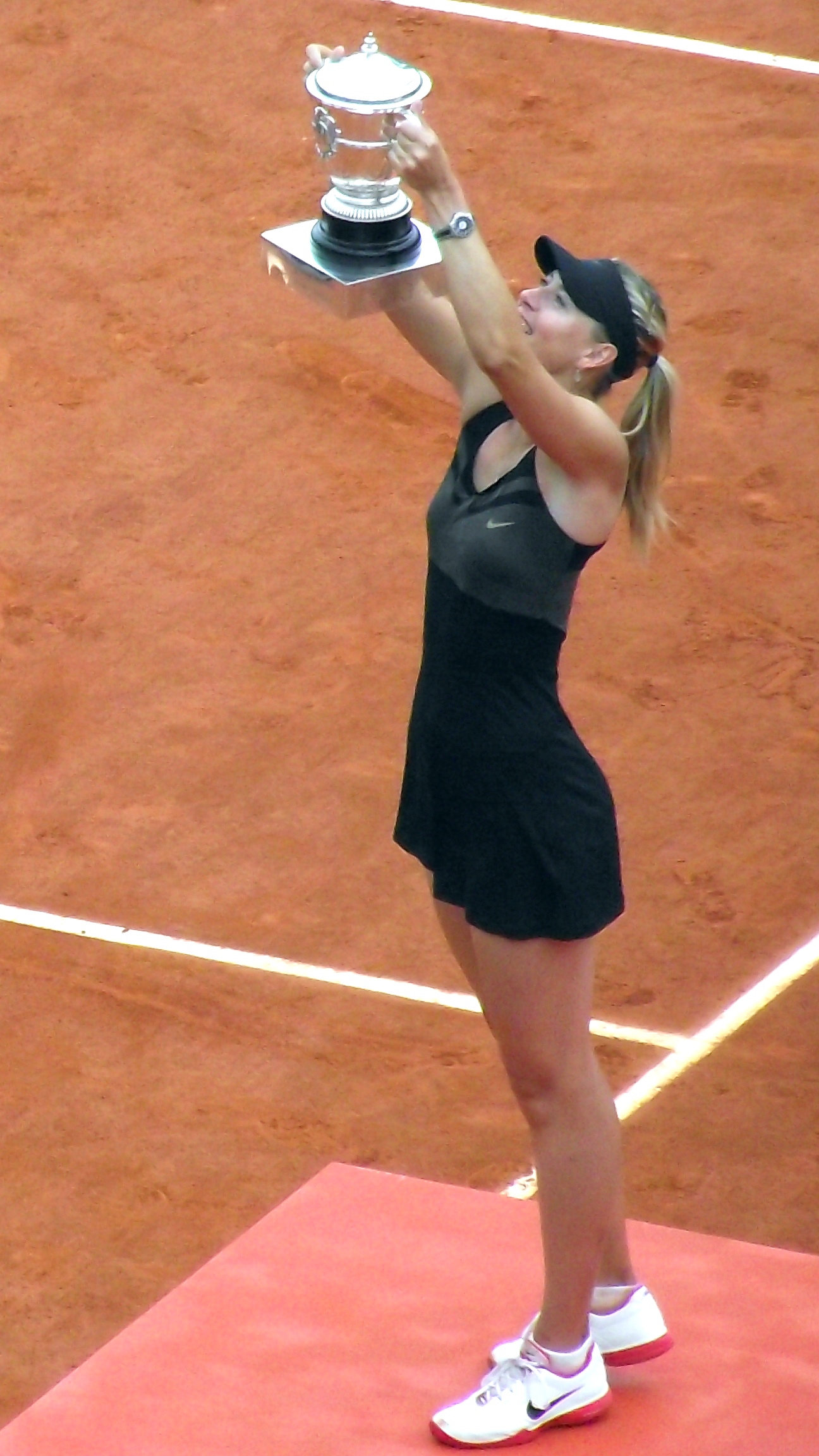
What Is Tennis?
Tennis is a racket sport played between two players (singles) or two teams of two players (doubles) on a rectangular court divided by a net. Players use rackets to hit a rubber ball over the net and into the opponent's court, trying to win points by making the ball land in a way the opponent cannot return it.
The game is played on a variety of surfaces including clay, grass, and hard court, each with different characteristics. Professional tennis features four major Grand Slam tournaments: the Australian Open, the French Open (Roland Garros), Wimbledon, and the US Open — tournaments that Maria Sharapova won a combined five times.
Understanding the Tennis Court
Before you pick up a racket, it helps to understand the court you'll be playing on. A standard tennis court is a rectangle 23.77 metres long and 8.23 metres wide for singles, or 10.97 metres wide for doubles.
| Court Feature | Measurement | Purpose |
|---|---|---|
| Overall length | 23.77 m (78 ft) | Full playing area |
| Singles width | 8.23 m (27 ft) | Side to side for singles play |
| Doubles width | 10.97 m (36 ft) | Includes the doubles alleys |
| Net height (centre) | 0.914 m (3 ft) | The barrier over which the ball must pass |
| Net height (posts) | 1.07 m (3 ft 6 in) | Net posts at the sides |
| Service box depth | 6.4 m (21 ft) | Where the serve must land |
The court is divided into two halves by the net. Each half contains a service box (two boxes separated by the centre service line) and the baseline at the back. The area between the singles and doubles lines is called the doubles alley — only used in doubles matches.
Equipment You Need
Tennis doesn't require a lot of equipment to get started, but the right gear makes a real difference to your enjoyment and development.
The Racket
Your racket is your most important piece of equipment. For beginners, look for a racket with a large head size (100–115 square inches) — more forgiving on off-centre hits — and a weight between 260g and 280g. A pre-strung racket from a reputable brand is perfectly fine when starting out.
As you progress, you may want to experiment with different weights, head sizes, and string tensions. Maria Sharapova famously used a HEAD racket throughout most of her career, with a relatively open string pattern that gave her additional spin on her groundstrokes.
Tennis Balls
Regular tennis balls are used on hard and grass courts. For clay courts or beginners, slightly slower balls (Stage 2 or Stage 1 in the ITF classification) can make learning easier. A can of three balls is standard — change them out when they lose their bounce and pressure.
Shoes
Never play in running shoes on a tennis court. Tennis-specific shoes are designed for the lateral (side-to-side) movements tennis demands, and they provide the ankle support and sole grip you need. Clay court shoes have a herringbone sole pattern; hard court shoes have a flat, durable sole.
Clothing
Breathable, flexible athletic clothing is all you need. For competitive play, Wimbledon requires all-white attire — a tradition dating back to the 19th century.
How a Tennis Match Works
A tennis match is made up of points, which form games, which form sets, which form the match. Understanding this hierarchy is key.
- Points are the smallest unit. Win four points (generally) to win a game.
- Games — win six games (with a two-game lead, or via a tiebreak) to win a set.
- Sets — most matches are best of three sets (first to win two sets wins). Grand Slam men's singles are best of five sets.
The points in a game go: 0 (Love) → 15 → 30 → 40 → Game. If both players reach 40-40, it's called "deuce" and the next point wins "advantage" — that player must then win the following point too, or it returns to deuce. Full explanation in our Scoring Guide.
The Serve: Starting Every Point
Every point in tennis begins with a serve. The server stands behind the baseline and hits the ball diagonally into the opponent's service box. Here's how it works:
- You get two attempts (a first serve and a second serve) to land the ball in the correct service box.
- If both serves land outside the service box or in the net, it's a double fault and you lose the point.
- If the serve clips the net but lands in the correct service box, it's called a "let" — you serve again without penalty.
- Service alternates: first serve is from behind the right side of the baseline, second point from the left, and so on.
- Players alternate who serves each game.
Playing a Rally
After the serve, the point continues with players hitting the ball back and forth — this is called a rally. You can hit the ball:
- Before it bounces (called a volley — usually done near the net)
- After one bounce (the standard groundstroke)
- Off the back foot (when the ball comes low after bouncing)
The ball must land within the court boundaries (inside the lines). If it lands outside, it's "out" and the opponent wins the point. If it hits the net and doesn't cross, the hitter loses the point.
In singles, the ball must land within the singles sidelines. In doubles, the wider doubles alleys are also in play.
How to Win Points
You win a point when:
- Your opponent fails to return the ball over the net
- Your opponent hits the ball out of bounds
- You hit a winner — a shot your opponent cannot reach before it bounces twice
- Your opponent commits a double fault on their serve
- Your opponent hits the ball into the net
Keeping Score
Tennis has a unique scoring system that can be confusing at first. Here's the basic flow:
- The server calls the score before each point, always announcing their own score first. E.g., "30 – 15" means the server has 30 points and the receiver has 15.
- A game is won when one player reaches 40 and wins the next point — unless both reach 40 (deuce).
- At deuce, a player must win two consecutive points to win the game (advantage, then game).
- After winning a game, move to the next game. After 6 games (with a 2-game lead or via tiebreak), you've won a set.
For a complete breakdown, read our Tennis Scoring guide.
Basic Technique for Beginners
The Forehand
The forehand is typically the first shot players learn. Stand sideways to the net, bring the racket back, and swing forward through the ball as it rises, making contact in front of your body. Follow through across your body to shoulder height. This is the bread-and-butter shot of most recreational players.
The Backhand
On your non-dominant side, the backhand can be hit with one hand (more elegant, allows greater reach) or two hands (more power and stability). Most beginners find the two-handed backhand easier to control. Maria Sharapova played with a two-handed backhand.
Moving on Court
Good footwork is as important as good stroke technique. Stay on the balls of your feet (not your heels), take small split-steps before your opponent hits the ball, and use side-shuffle steps to move laterally. Explosive first steps are more important than top-end speed.
Tennis Etiquette and Sportsmanship
Tennis has a strong tradition of sportsmanship and fair play. Here are the unwritten rules every player should know:
- Call your own shots in or out honestly — if you're not sure, give the point to your opponent.
- Call the score clearly before each point when you're serving.
- Don't celebrate your opponent's errors with excessive enthusiasm.
- Keep time between points — excessive delay is against the rules.
- Shake hands (or touch rackets) at the net after the match, win or lose.
- Don't walk behind a court while a point is in play on the adjacent court.
Your First Session: What to Focus On
When you step on a court for the first time, don't worry about winning or tactics. Focus on these fundamentals:
- Grip — Hold the racket in an Eastern forehand grip (like shaking hands with the racket handle). This is the most versatile grip for beginners.
- Watch the ball — Keep your eye on the ball all the way through contact. This is the most common mistake beginners make.
- Get the ball over the net — Your only job in the first few sessions is to get the ball back into play. Aim for the middle of the net, which is the lowest point.
- Mini tennis — Start inside the service boxes (only about 12 metres apart) and gradually work your way back to the baseline as you build confidence.
- Have fun — Tennis is a game. The competitive aspect develops naturally over time. Enjoy the process.
Even Maria Sharapova started as a complete beginner at age four in Sochi. The difference between a good player and a champion is not talent alone — it's consistency of practice and attitude. If you commit to learning correctly from the start, you'll progress much faster.
Next Steps
Once you've got the basics, continue your tennis education with our other guides: