Why Start Tennis Young
Tennis is often described as a lifelong sport, and that description is entirely accurate. Unlike team sports that are difficult to continue past a certain age or body type, tennis adapts to its player. You can rally gently in your seventies or compete fiercely in your teens. The earlier a child starts, the deeper the technical foundations they build — and those foundations last a lifetime.
The argument for starting young is not simply about producing elite players. The physical benefits extend far beyond the court:
- Coordination and motor development: Striking a moving ball requires the hand-eye coordination, timing, and spatial awareness that underpin almost every physical activity. Children who develop these skills early through tennis tend to pick up other sports more quickly as well.
- Mental discipline: Tennis is played one point at a time. Learning to reset after a mistake, to stay calm under pressure, and to problem-solve against a changing opponent are life skills dressed up as tennis skills.
- Social development: Junior tennis creates friendships across clubs, counties, and countries. Children learn sportsmanship, respect for opponents, and how to win and lose with dignity.
- Physical literacy: The multi-directional movement in tennis — sprinting, shuffling, stopping, changing direction — develops the general athletic ability children carry into every sport and physical activity they try.
The Right Age to Start
There is no single right age to start tennis, and children should never feel that they have "missed the window." That said, most national federations and the International Tennis Federation (ITF) now recognise distinct developmental stages that guide appropriate introduction to the game.
The ITF's Play and Stay programme is the global framework for junior tennis development. It uses modified equipment — slower balls, smaller courts, shorter rackets — to make the game immediately playable and fun for children at each stage of physical development. Rather than asking small children to manage a full-size court with a fast yellow ball bouncing above their heads, Play and Stay brings the game down to a child-appropriate scale so that rallying and competitive play happen from the very first session.
| Programme Stage | Age Range | Ball Type | Court Size | Key Focus |
|---|---|---|---|---|
| Mini Tennis / Pre-Tennis | 4–5 years | Foam ball | Very small (6–8m) | Fun, movement, first contact with ball |
| Red Ball | 4–8 years | Red low-compression | 11m (36ft) court | Basic rally skills, coordination, enjoyment |
| Orange Ball | 8–10 years | Orange mid-compression | 18m (60ft) court | Groundstrokes, simple tactics, short matches |
| Green Ball | 9–11 years | Green reduced compression | Full size court | Stroke technique, longer rallies, scoring |
| Yellow Ball | 10+ years | Standard yellow | Full size court | Full game, competition, all strokes |
The transition between stages should be led by ability, not age. A physically advanced nine-year-old who is rallying confidently on the Orange Ball court can move to Green Ball early. A ten-year-old who is still developing timing and coordination may benefit from spending longer on the Green Ball before transitioning to standard play. The goal is always confidence and enjoyment — a child pushed to standard play before they are ready will struggle, lose confidence, and often lose interest.
Equipment for Junior Players
The single most common mistake parents make with junior tennis is buying an adult racket. An adult racket is far too heavy and too long for a child — it forces poor technique, makes the game hard and frustrating, and creates swing habits that take years to correct. Junior rackets are not simply small adult rackets: they are designed to match a child's physical proportions, allowing them to swing freely and hit cleanly without fighting the weight of the frame.
Racket Sizing Guide
| Age | Height | Racket Length | Stage |
|---|---|---|---|
| Under 6 | Under 100cm / 3'4" | 19 inches (48cm) | Red Ball |
| 6–8 years | 100–115cm / 3'4"–3'9" | 21–23 inches (53–58cm) | Red Ball |
| 9–10 years | 115–125cm / 3'9"–4'1" | 25 inches (63cm) | Orange / Green Ball |
| 10–12 years | 125–140cm / 4'1"–4'7" | 25–26 inches (63–66cm) | Green / Yellow Ball |
| 12 and over | 140cm+ / 4'7"+ | 27 inches (68.5cm) | Standard adult |
A simple field test: have the child hold the racket at their side. If the frame touches or almost touches the ground, it is too long. The tip of the racket should clear the ground by 5–10cm. The grip size should allow the child to wrap their fingers comfortably around the handle — a grip that is too large makes wrist action difficult; too small reduces control.
Junior Tennis Shoes
Junior tennis shoes matter more than many parents realise. Tennis involves rapid lateral movement, stopping, and changing direction — movements that place very different demands on the foot than running forward. Running shoes have minimal lateral support and can roll on sideways movements, increasing ankle injury risk. Junior tennis shoes have a reinforced lateral upper, a wider sole for stability, and a flat sole profile suited to court surfaces. For clay courts specifically, a herringbone-patterned sole prevents slipping.
Children's feet grow fast. Check the fit every three to four months and replace shoes when there is less than one thumb's width of space at the toe. A shoe that is too small forces the toes to curl under, affecting balance and movement mechanics.
The Ball Progression System
The Play and Stay ball progression is one of the most important innovations in junior tennis over the past twenty years. Before its widespread adoption, young children would arrive on a full-size court with a standard yellow ball — a ball that bounced over their heads, came through too fast to time, and made rallying essentially impossible. The result was frustration, poor habits, and a high dropout rate. The ball progression solves all of this.
Red Ball
The Red Ball has approximately 75% less compression than a standard yellow ball. It bounces low and slow, staying in a child's hitting zone long enough for them to prepare, swing, and make clean contact. Played on a shortened court (11 metres), Red Ball allows immediate rallying and competitive play from the very first lesson. Children hit more balls, develop timing earlier, and stay engaged because the game works.
Orange Ball
The Orange Ball has roughly 50% less compression. Played on an 18-metre court, it generates a more realistic bounce height while still giving players enough time to prepare. At this stage, groundstrokes become more recognisable as adult strokes. Simple tactical concepts — crosscourt and down the line, keeping the ball deep — can now be introduced meaningfully because rallies are long enough to apply them.
Green Ball
The Green Ball — sometimes called the Green Dot — has approximately 25% less compression than a standard ball. Played on a full-size court, it slows the game just enough for developing players to work with realistic stroke mechanics, court positioning, and tactical patterns. Many coaches view the Green Ball stage as the most important technical development period in junior tennis.
Yellow Ball
The standard ITF yellow ball is introduced when a player has the technical foundation to handle its pace and bounce. This is typically around age 10–11, though physical development and ability level determine readiness more than age. Rushing a player to the yellow ball before they are ready is one of the most common mistakes in junior development — it compresses technique and rewards physical power over skill.
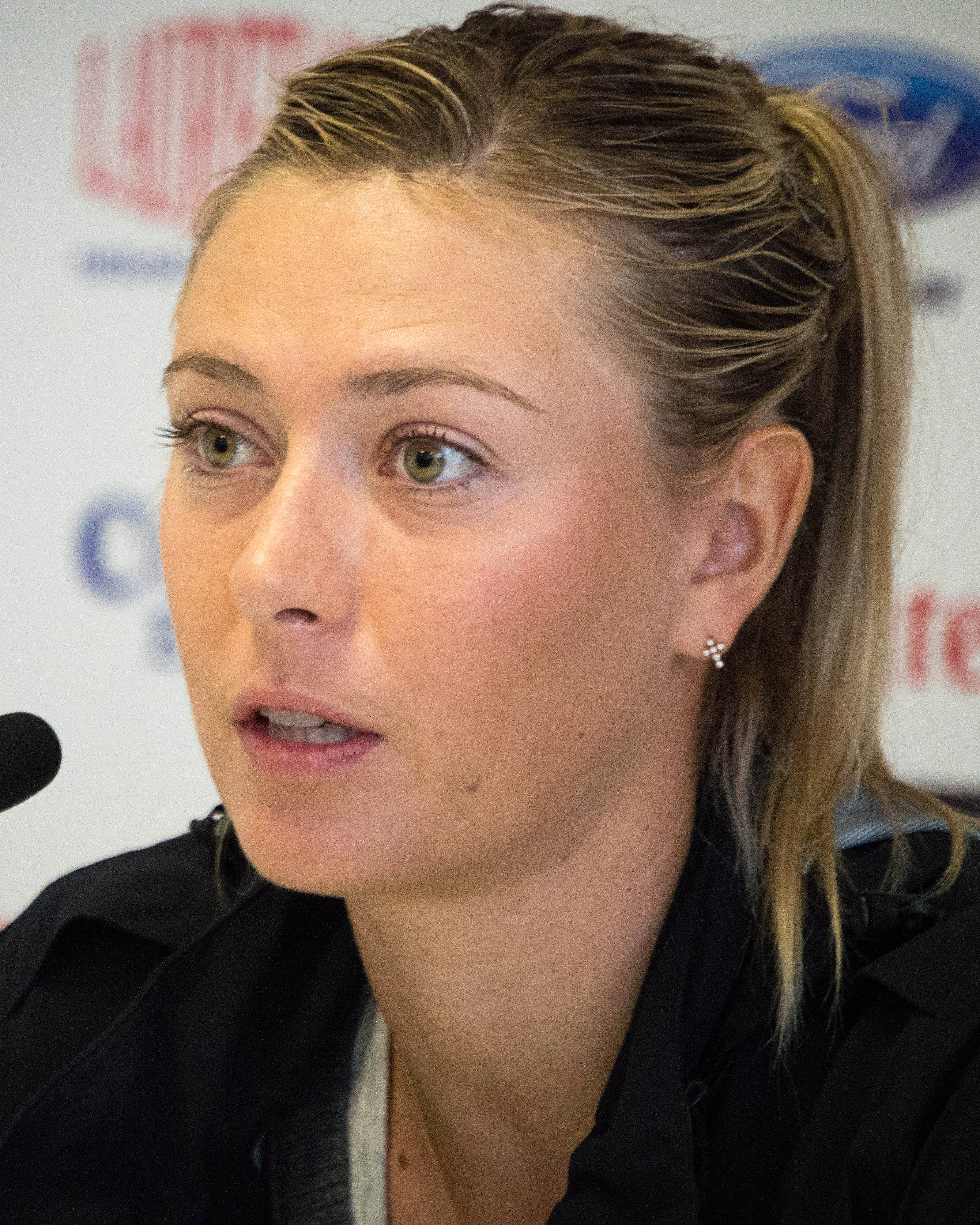
Maria Sharapova's Junior Story
Maria Sharapova's path from a six-year-old in Sochi to a Wimbledon champion at seventeen is one of the most remarkable stories in tennis history — and it began with a sacrifice that most families could not imagine making.
In 1994, when Maria was seven years old, Yuri Sharapova made a decision. He had seen enough to believe that his daughter had exceptional potential — not just talent, but the mental toughness and competitive drive that separates good junior players from great ones. He had heard of the Bollettieri Tennis Academy in Bradenton, Florida, the world's most prestigious junior academy, responsible for developing Andre Agassi, Monica Seles, and Jim Courier.
Yuri scraped together enough money for two one-way tickets to the United States. He and Maria left Russia with $700 between them and no certainty of what would happen next. The family's sacrifice was profound: Maria's mother, Yelena, could not obtain a US visa and remained in Russia. Father and daughter were separated from the rest of their family for nearly two years.
The lessons of Sharapova's junior story are not that every talented child should leave home and travel thousands of miles at age seven. They are that dedication, sacrifice, and structured development from a young age can produce extraordinary results — and that behind every elite junior player, there is almost always a parent or family who made significant sacrifices to give that child the best possible chance.
Choosing a Junior Coaching Programme
The quality of early coaching can shape a junior's relationship with tennis for a lifetime. A great junior coach creates enthusiasm, builds confidence, and lays technical foundations that support a player's development for years. A poor early experience can turn a child off the sport entirely.
Types of Programmes
Group Lessons at a Local Club
The most common starting point and, for most juniors, the right one. Group lessons are affordable, social, and appropriate for beginners through intermediate players. The social element — playing alongside peers — is a significant motivator for children. A good group lesson for under-10s will have a maximum of 6–8 children per coach and will involve more ball contact than instruction.
Individual Coaching
One-to-one coaching accelerates technical development and is valuable for juniors who have identified tennis as a priority sport. Individual lessons are most effective when combined with group play for matchplay experience. Purely individual coaching without regular competitive practice can produce technically accomplished players who struggle under match pressure.
Junior Academy Programmes
Full-time or intensive part-time academy programmes are suitable for committed juniors with competitive ambitions. They typically include daily court time, fitness training, video analysis, and competition preparation. The financial and time commitment is significant — these programmes are appropriate for a small minority of junior players and only when the child's own motivation is clear.
School Tennis Teams and Holiday Camps
School tennis — where available — provides structured competition and peer participation at no additional cost. Holiday camps are an excellent way to increase court time and exposure during school breaks. They are particularly valuable for introducing children to tennis without the commitment of a regular programme, making them an ideal starting point for beginners.
What to Look for in a Junior Coach
The most technically knowledgeable coach in a county is not necessarily the best coach for a seven-year-old. Junior coaching requires specific skills beyond tennis knowledge:
- Patience and encouragement: A good junior coach celebrates effort more than results. Children develop at different rates, and a coach who shows frustration with slow progress — however subtly — damages confidence.
- Knowledge of developmental stages: The physical and cognitive abilities of an eight-year-old and a twelve-year-old are vastly different. A skilled junior coach adjusts their expectations and communication style accordingly.
- Fun first: For players under twelve, the primary purpose of every session should be enjoyment. Technical development follows naturally when children want to keep coming back. A coach who prioritises fun is not being unambitious — they are being developmentally appropriate.
- Qualified and accredited: Look for coaches with national federation accreditation (LTA Level 2 in the UK, USTA Professional Development credentials in the US, or equivalent). This ensures they have received formal junior coaching education.
Junior Tournament Structure
Competition is an important part of junior tennis development, but introducing it at the right level and the right time matters enormously. Entering tournaments too early — before a child has the technical foundation to compete — can be discouraging. Waiting too long can mean a junior lacks the competitive experience to handle pressure when they do start.
Levels of Competition
| Level | Typical Age | Description | When to Start |
|---|---|---|---|
| Club internal events | Any age | Friendly in-club competitions, often mini tennis formats | From first year of playing |
| Local / county level | 8–16 | Age-group tournaments organised by regional federations | After 6–12 months of lessons |
| Regional / national | 10–18 | Nationally ranked junior circuits | When performing consistently at county level |
| ITF Junior Circuit | 14–18 | International competition with world ranking points | Elite players only; academy-level commitment required |
| Grand Slam Junior events | 15–18 | Junior Wimbledon, Junior Roland Garros etc. | Top junior players in the world |
For the vast majority of junior players, the club and county level is where their competitive journey begins and flourishes. The ambition to reach national or international junior competition is entirely valid — but it should grow from performance, not be imposed as an expectation before the player has demonstrated readiness.
A critical principle: always compete at the right level. A child who wins every match in their first year of competing is not being challenged — and is not developing the resilience that comes from losing and learning. A child who loses every match has been entered at a level too high and is likely to become discouraged. The right competitive environment means winning some matches, losing some, and always having to work hard for the result.
Balancing School and Tennis
For the majority of junior players, tennis is one activity among many — and school remains the primary commitment. Even for seriously ambitious juniors, sustainable long-term development requires getting the balance right. Burnout, both physical and emotional, is one of the leading causes of junior dropout from tennis, and it is almost always connected to excessive demands placed on a child before they are ready to handle them.
Recommended Maximum Training Hours by Age
| Age Group | Max Weekly Tennis Hours | Notes |
|---|---|---|
| Under 10 | 5 hours | Includes all court time; emphasise variety and fun over repetition |
| 10–12 years | 8 hours | Can introduce structured technique work; include movement skills |
| 12–14 years | 10–12 hours | Competition preparation appropriate; still protect growth plates |
| 14–16 years | 15–18 hours | Include off-court fitness; monitor academic performance |
| 16–18 years | 20+ hours | Elite pathway only; full programme with strength and conditioning |
These are maximums, not targets. A ten-year-old playing four hours of tennis per week and genuinely enjoying every session is developing far better than one playing eight hours but losing motivation. Academic performance should never be sacrificed for tennis training at junior level. Schools, clubs, and parents should work together to protect study time, particularly during exam periods.
Time management becomes a skill in itself. Juniors who learn to organise their school work, training schedule, and rest time are developing habits that will serve them long after their playing days. Some of the most organised professional players credit their junior training schedules with teaching them the discipline that enabled their academic success alongside their tennis careers.
The Mental Side for Juniors
Tennis is one of the few sports where you face your opponent entirely alone. There is no teammate to pass to when under pressure, no coach to call a timeout, no substitution when you are struggling. Every point is a solo decision under competitive stress. This makes the mental side of junior tennis as important as the physical and technical sides — and it is often the last to be developed.
Healthy Competition for Young Players
The relationship with competition that a junior develops between ages eight and twelve will shape their entire tennis life. A child who is taught that winning is the only measure of success will struggle to handle the inevitable losses that are part of any sport. A child who is taught that effort, improvement, and fair play are the primary values will build the resilience to lose well and the motivation to keep improving.
- For under-12 players: Fun should always come first. Results matter less than the quality of the process — showing up, working hard, treating opponents with respect, and enjoying the competition regardless of the score.
- Dealing with losses: Every junior loses matches — frequently. The response to a loss is more important than the loss itself. Parents and coaches who react badly to defeats create children who are afraid of losing, which invariably makes them worse competitors. The right response is calm acknowledgment, a short discussion of one or two things to work on, and looking forward to the next match.
- Effort over results: Praising a child for winning when they didn't try hard teaches the wrong lesson. Praising a child for competing with total effort even in a loss teaches the right one. Effort is entirely within a child's control; results are not.
- Building resilience: Resilience is not taught — it is experienced. Junior players need to encounter difficulty, handle it imperfectly, recover, and try again. Parents who protect children from every difficult competitive experience do not build resilient competitors; they prevent them from forming.
The Parent's Role in Junior Tennis
Parents are the most important influence in a junior tennis player's development — for better or worse. The research on junior sport consistently shows that parental support and attitude has a greater impact on a child's long-term participation and enjoyment than coaching quality, facility access, or even natural talent. This is both reassuring and a significant responsibility.
Courtside Behaviour
The way a parent behaves during a child's match communicates everything about their values and expectations. The most common courtside mistakes parents make are well-documented and have measurable negative effects on performance and enjoyment:
- Coaching from the stands: Junior tennis rules prohibit coaching during play — not as a formality, but because it creates divided attention. A child trying to process a parent's shouted instruction while playing a point cannot give the point full concentration. Let the coach do their job during matches.
- Negative body language: Head shaking, visible disappointment, tense posture — children read their parents' reactions constantly, even when focused on a match. Negative non-verbal feedback adds pressure that is not helpful.
- Over-analysis after matches: The car ride home after a match is not the time for a detailed tactical debrief. Allow the child to process the match in their own time. If they want to discuss it, listen first. Save any coaching observations for the next practice session.
- Result focus: Asking "did you win?" rather than "did you enjoy it?" or "how did you play?" repeatedly teaches children that winning is the measure of their worth on court. This is the surest route to performance anxiety and early dropout.
Financial Reality
Junior tennis is one of the more expensive youth sports. The cumulative cost of coaching, equipment, club membership, tournament entry fees, and travel adds up quickly. For families considering a serious competitive pathway, an honest assessment of financial commitment is necessary early:
- Group coaching at club level: £50–£150 per month depending on frequency and location
- Individual coaching: £30–£80 per hour
- Junior racket replacement: every 12–18 months as the child grows
- Tournament entry fees: £15–£50 per event at regional level; considerably more at national level
- Academy programmes: £5,000–£30,000+ per year for full-time residential programmes
For the vast majority of junior players, local club programmes with group coaching provide excellent development at a fraction of the cost of elite academies. The decision to invest in an academy programme should be driven by a child's own demonstrated commitment and genuine elite-level potential — not parental ambition.
Academy vs. Local Club: Making the Right Choice
The majority of juniors are best served by a high-quality local club programme through to at least 12–14 years old. Full-time tennis academies are appropriate for a small minority of players who have demonstrated both elite potential and the personal maturity to handle the demands of an intensive programme away from family. Signs that a child may be ready for more intensive development include: consistently outperforming peers of the same age and training background, strong internal motivation (rather than parental motivation), a demonstrated ability to handle setbacks maturely, and a clear personal desire — not just willingness when asked — to commit more time to tennis.
Physical Development Considerations
Children's bodies are not simply smaller adult bodies. They are actively growing structures with specific vulnerabilities that must be understood and respected in any junior training programme. Ignoring these differences — in pursuit of early competitive success — can cause injuries with long-term consequences.
Growth Plates and Injury Risk
Growth plates are areas of developing cartilage near the ends of long bones. They are the sites where bone growth occurs and, until they close (typically mid-to-late teenage years), they are more vulnerable to injury than surrounding bone and ligament tissue. Repetitive loading on growth plates — particularly at the shoulder, elbow, and wrist — can cause growth plate stress reactions and, in severe cases, growth plate fractures.
For players under twelve, the following principles apply:
- Limit overhead serving volume: The serve places the highest load on the shoulder growth plate. Under-12 players should practice serving in limited quantity and should not be encouraged to generate maximum force on serves at this age.
- Avoid repetitive single-motion drills: Feeding 200 forehands in a row to a ten-year-old is not high-quality practice — it is a recipe for repetitive strain. Variety in drill types reduces cumulative joint loading.
- Rest and recovery: Growing bodies need more rest than adult bodies. A programme that runs six days per week for an under-12 player is almost certainly doing more harm than good.
- Listen to pain: Children often don't report discomfort until it has become significant. Ask regularly how they feel, normalise the idea that reporting pain is the right thing to do, and act on any complaint of joint pain by reducing load and seeking medical assessment.
Movement Skills Before Technique
The research on youth athletic development consistently supports the principle of building broad physical literacy before specialising in sport-specific technique. For junior tennis players under ten, this means that time spent on general movement skills — balance, agility, coordination, spatial awareness — is at least as valuable as time spent on tennis-specific technique.
Practically, this means that a well-designed junior programme for young children should look more like play than professional training. Obstacle courses, movement games, catching and throwing activities, and creative movement challenges all develop the physical literacy that underpins tennis skill. A child who moves well — who has good balance, coordination, and body awareness — will pick up tennis technique faster than a child with exceptional technical instruction but limited general movement ability.
Under 8: Movement and Play
The primary goal is physical literacy and love of the game. Activities should involve lots of movement variety, ball contact of all kinds, and games with simple rules. Technical instruction should be minimal and expressed in simple, positive language. Every session should end with the child having had fun and wanting to come back.
8–11: Foundation Skills
Groundstrokes, simple serve mechanics, and basic net play can now be introduced with more structured technique guidance. Movement-to-ball and recovery steps become specific focus areas. Short competitive games and simple match play begin to appear alongside technical practice.
11–14: Technical Development
This is the primary window for detailed technical work, particularly on the serve, topspin groundstrokes, and net game. Physical conditioning that is age-appropriate — bodyweight exercises, agility, flexibility — can be introduced alongside court time. Competition becomes a regular and important part of the programme.
14–18: Competitive Development
At this stage, tactical development, specific physical conditioning, and competitive experience become the dominant concerns. Technical refinement continues, but the foundation is largely set. The focus shifts to competing effectively, managing pressure, and building the consistency required for senior competition.
Getting Started: A Practical Checklist
Whether your child is four and curious about the colourful balls at the local sports centre, or twelve and looking to take their club tennis more seriously, the path forward follows the same basic steps:
- Find your local club: Most national federations have club-finder tools on their websites (LTA for the UK, USTA for the US, Tennis Australia, etc.). Contact two or three clubs, ask about their junior programmes, and watch a session before committing.
- Get the right equipment: Use the racket sizing guide above to find the correct length. Do not buy an adult racket. Purchase a pair of actual tennis shoes — running shoes are not suitable for court play.
- Start with group lessons: Individual coaching can follow when the child has the attention span and basic technical foundation to make one-to-one time productive. Group lessons are better for beginners.
- Enter a local internal competition: Most clubs run regular internal events for beginners. These low-pressure matches are ideal first competitive experiences — familiar faces, familiar court, and a supportive environment.
- Let the child lead: The most important question throughout the junior journey is not "are they improving?" but "are they enjoying it?" A child who loves tennis will improve. A child who is pushed before they are ready may never love it at all.
Frequently Asked Questions
At what age should my child start playing tennis?
Children can start with the red ball mini-tennis programme from age 4–5. This uses a low-compression ball, smaller racket, and reduced court to match a child's physical development. From age 8, the orange ball programme introduces a slightly larger court, and from around 10–11, most children are ready for full-size courts with standard yellow balls.
How much should a junior player train at age 12?
At age 12, 8–10 hours of total tennis per week (including match play) is appropriate for a child with serious aspirations. More than this risks physical burnout and overuse injuries during a growth phase when bones and tendons are still developing. Enjoyment and skill development should be prioritised over competitive results until at least age 14.
Should I send my child to a tennis academy?
Full-time academies are appropriate only for players with a genuine high-level aspiration and the physical and mental maturity to handle intensive training, often away from home. For the majority of juniors, quality local coaching 3–4 times per week provides excellent development without the financial burden or separation from family and schooling that residential academies require.
How important are junior tournament results for a child's development?
Less important than commonly believed. Research consistently shows that early junior rankings are poor predictors of adult success. What matters more is the quality of technical development, enjoyment of competing, and resilience built through the process. Many top professionals were not outstanding junior tournament players. Focus on consistent improvement rather than ranking points.