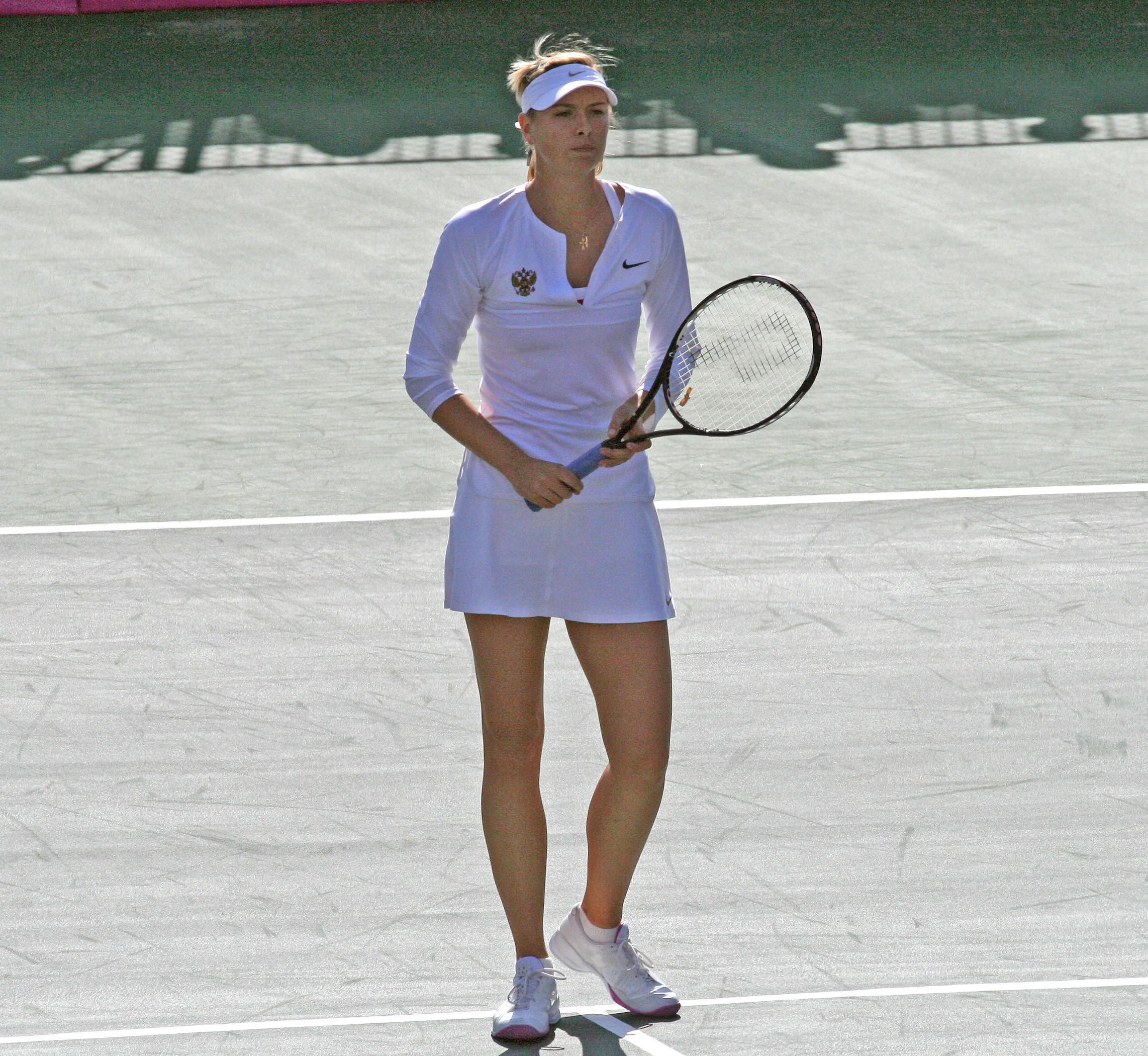
The Doubles Court
In doubles, the full width of the court is used — including the alleys (tramlines) on each side. This makes the court 10.97 metres (36 feet) wide, compared to 8.23 metres (27 feet) in singles.
Court Width
36 ft (10.97m) — 4.5 ft wider on each side than singles. The alleys are always in play.
Court Length
78 ft (23.77m) — identical to singles. Only the width changes in doubles.
Service Box
The service box dimensions do NOT change. The serve must still land in the same service box as in singles.
Service Alley
The alleys are OUT on serves — the serve must land in the standard service box even though the court is wider.
Key Rules for Doubles
Serving Order
Doubles serving follows specific rotation rules:
- Teams decide (by coin toss or spin) which team serves first and which side to start on.
- Within a team, each player serves alternating games — you cannot change this within a set.
- The serving order can be changed at the start of each new set.
- If both players on a team want to serve the first game of a new set, they can discuss and choose — but once decided, the pattern is fixed for that set.
Example: If Player A and Player B are a team, and A serves game 1, B serves game 3, A serves game 5, and so on. The opponents follow their own pattern independently.
Receiving Order
- The receiving team also decides who receives in which service box at the start of each set.
- Within a game, the same player receives each point from the same side (deuce side or ad side).
- The receiving positions can be changed at the start of each new set, but not mid-set.
Service Rules in Doubles
Service rules are identical to singles — the server gets two serves per point. The serve must land in the diagonally opposite service box. Lets are replayed. A double fault loses the point.
Who Can Hit What?
Either partner can hit any ball on their side of the net. There is no rule requiring each player to stay in their half of the court. However, only one player may hit the ball per stroke — it is a fault if both players strike the ball.
The ball may touch the net post but must not touch the net post's support cables or the ground before crossing over. A ball that passes around the outside of the net post and lands in is legal (extremely rare, but real).
Positioning
Doubles positioning is the biggest difference from singles. The most effective formation puts pressure on the opponents immediately.
The Standard Formation: One Up, One Back
The classic doubles formation during a serve:
- Server: Serves from behind the baseline, then stays back or comes to net depending on the serve quality.
- Server's partner: Stands at the net, positioned near the centre of the service box they're not occupying, slightly inside the service line.
- Receiver: Positioned behind the baseline in the receiving court, diagonal to the server.
- Receiver's partner: Stands at the net in their half — OR stays back to defend against the net player.
Both Up (Attacking)
When your team gets a short ball or a chance, both players advance to the net. This is the most aggressive and effective formation — two net players create angles and put enormous pressure on the opposing team to find precise passing shots.
- Look for a short return, a weak serve, or a defensive floater to advance.
- Both players should be at the service line or closer — not at the net-cord, which reduces reaction time.
- Target the gaps: aim between the opponents, or at the feet of the player who just hit.
Both Back (Defending)
When both opponents are at the net and you're under pressure, retreat to the baseline. This reduces angles and gives you time.
- Hit high, deep lobs to push them back.
- Aim for the person who just volleyed — they may still be moving.
- Look for the first chance to attack and come to net yourself.
Net Play
Net play is the dominant feature of high-level doubles. A team that controls the net controls the match.
Volleying in Doubles
- Crosscourt volley: Hit to the open court diagonally. Low-risk; maintains your positioning.
- Down-the-line winner: Volley down the sideline past the opponent at net. High reward, requires precision.
- Angled volley: Short, angled volleys that pull the opponent wide and open the court.
- Drop volley: A soft volley that barely clears the net. Effective when opponents are deep.
The Overhead Smash
When opponents lob, the ideal response is an overhead smash. In doubles, call "mine!" to avoid collision. The player in better position should take it. If in doubt, the player on the ad side typically takes centre lobs. Aim the overhead at one of three targets: down the middle, or at the hips of either opponent.
Poaching
Poaching is the most dynamic net tactic in doubles — the net player crosses to intercept a crosscourt shot directed at the server.
When to Poach
- When the receiver makes contact late and the shot is likely to be weak and crosscourt.
- When you've been staying still for several points — opponents stop expecting the movement.
- After a strong serve down the T — the receiver's options are more limited.
- On a pre-arranged signal with your partner (a fist behind the back = poach, open hand = stay).
Faking
You don't always need to commit. A fake movement toward poaching can pull the receiver's eyes away from the ball and create a mistake — even if you return to your position. This is legal and effective at all levels.
Communication
In doubles, communication between partners is constant and essential. Before each point, agree on:
- Serve placement: "I'm going out wide" or "down the T" — so your partner knows where the return might come.
- Poaching: Use hand signals behind your back (hidden from opponents).
- Lob response: Who covers the centre? Who takes wide ones?
- Mid-point: Call "mine!" or "yours!" for every ambiguous ball.
Silence is the enemy in doubles. Even a simple "yes" or "no" call can eliminate the hesitation that costs points.
Return Strategy
The return in doubles is one of the most pressured shots in tennis — you're hitting toward a net player who is ready to poach. Best practices:
- Return crosscourt, low: The classic and safest return. Forces the server to play a defensive first volley. A low, dipping return at the server's feet is ideal.
- Lob the net player: A topspin lob over the net player's backhand is difficult to handle and buys time. Best used as a change-up, not the primary tactic.
- Attack down the line: The high-risk, high-reward option. Only attempt this when the net player has given away their poach with body language.
- At the body of the net player: Forces a difficult volley from a cramped position. Works especially well with a wide serve on the ad court.
The Alley — Open or Closed?
The alleys are a major tactical factor in doubles. The net player's job is to keep the opponent "honest" about the alley — if the alley is always open, the opponent will use it constantly.
- The net player stands close enough to the centre to poach crosscourt, but not so far that the alley is unguarded.
- Occasionally cover the alley down your line to remind the opponent it's defended — then return to centre position.
- After poaching, the server crosses to cover the vacated side.
Mixed Doubles
Mixed doubles (one man, one woman per team) follows the same rules with one common strategic wrinkle: opponents often target the woman or switch after a lob to force a position change. Key tactics:
- Position the woman on the ad side (receiving side) so she faces fewer attacks into her body on the deuce side.
- Serve down the centre to reduce angles.
- When the man is at net, the woman should cover the alley if he poaches.
- Don't let opponents dictate the target — if the woman is repeatedly targeted, she should move to take those shots early and aggressively to shut down the strategy.
Doubles Scoring
Doubles uses the same scoring system as singles (games → sets → match), but with one important difference: the deciding set at Grand Slams and major events is often played as a Match Tiebreak (also called a Super Tiebreak or Champions Tiebreak) to 10 points instead of a full third set. Club and recreational doubles frequently use this format for time management.
| Format | Scoring | Common In |
|---|---|---|
| Best of 3 (full sets) | First to 2 sets; tiebreak at 6-6 | Most club, WTA/ATP doubles |
| Pro Set | First to 8 games wins (tiebreak at 8-8) | Recreational, warm-up sets |
| Match Tiebreak | Third set replaced by 10-point tiebreak | Grand Slam doubles, mixed doubles |
| No-Ad scoring | First player to 40 wins the game (receiver chooses side) | Recreational, some tournaments |
Quick Doubles Tips
- Win the net: The team at net wins most points. Always look for opportunities to advance.
- Volley at feet, not bodies: Aim for the opponent's shoelaces — they can't attack a ball below the net.
- Serve wide on the ad side: Pulls the receiver off court, leaving the centre open for the net player to poach.
- Use the lob as a reset: When you're in trouble, a deep lob buys time and forces opponents back.
- Change pace: Mix hard drives with soft angled shots — varied pace is harder to handle than consistent pace.
- Call shots early: "Mine!" and "yours!" before the bounce, not after. React to the position, not the ball.
- Stay positive: Doubles requires constant togetherness. Encouragement after errors maintains momentum.
Frequently Asked Questions
Where should I stand when my partner is serving in doubles?
The non-serving partner stands at the net, positioned at the service line or slightly inside, roughly in the centre of their half of the court. Your job is to intercept any weak return, cover the down-the-line angle, and put pressure on the returner. Stay alert and move with your partner's serve direction.
What is poaching in doubles and when should I do it?
Poaching means crossing to intercept a ball aimed at your partner. You do it when you read the return direction early and can cut off the ball at the net for a winner. Signal your partner beforehand with a hand signal (index finger pointing = poach; closed fist = stay). Good poaching times: when the serve pulls the returner wide and you anticipate a crosscourt return.
What is the I-formation in doubles?
In the I-formation, the net player crouches in the centre of the net (on the centre line) rather than on their side, while the server decides secretly whether to go left or right after serving. The net player jumps to their agreed side after the serve, creating confusion for the returner who cannot predict which angle to target.
How should partners communicate during a doubles match?
Communication is continuous. Before each point: the net player signals whether they will poach and which direction the server should aim. After points: brief acknowledgment and reset. During changeovers: discuss patterns, identify which opponent is weaker, and adjust formations. Clear, positive communication is a significant tactical advantage.