Why the Return Matters So Much
A tennis match is divided into service games and return games. If you hold your service game every time and win just one return game per set, you win the set. That means every return game you win is a direct path to breaking serve — the single most decisive event in professional tennis.
Statistics from the ATP Tour consistently show that the player who converts more break-point opportunities wins the match in over 80% of cases. The return initiates that entire chain. A weak, passive return gives the server an easy put-away. A deep, aggressive return forces the server into a defensive position and immediately reverses the tactical advantage.
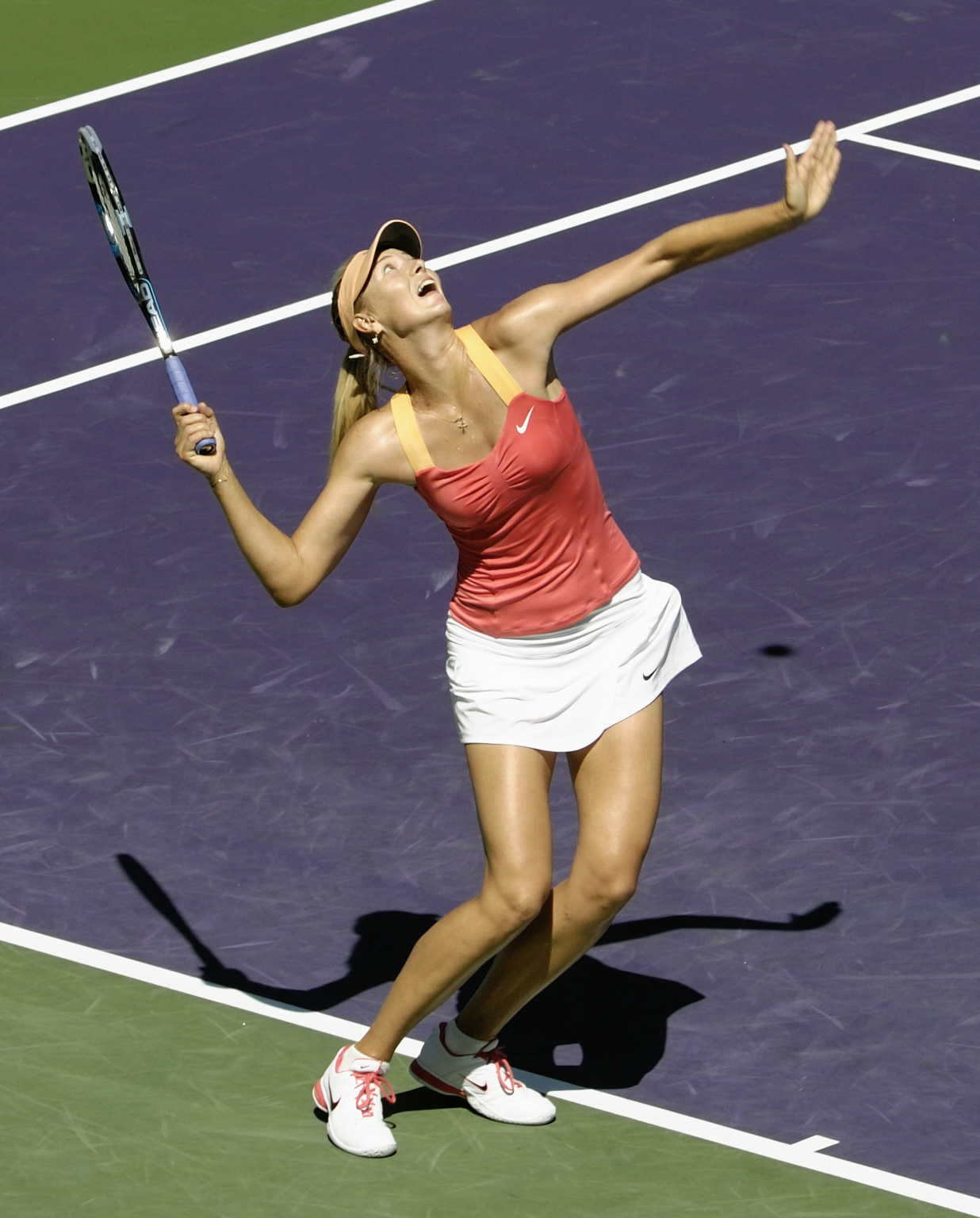
Maria Sharapova, whose own serve was a weapon, understood the return equally well. She positioned herself to attack second serves with her forehand, and her disciplined, compact stroke meant she rarely gave away cheap errors even against the biggest hitters on tour.
The Ready Position
Before the server even tosses the ball, the foundation of a good return is your starting position. Most club players make two common mistakes: they stand too close to the baseline, and they hold their racket too loosely.
Court Position for the Return
Where you stand depends entirely on the server's pace and spin tendency:
Against a Flat Serve
Stand 1–2 metres behind the baseline. You need more time to react to pace. Moving forward to attack a flat serve that bounces low and fast is extremely difficult — give yourself depth.
Against a Heavy Topspin Serve
Stand further back still, or even behind the baseline tram lines. Topspin serves that kick high require time to fall back into your strike zone. If you're jammed, your backswing collapses.
Against a Slice Serve (Wide)
Start slightly wider than centre — one step toward the singles sideline on the side the slice curves toward. This cuts off the angle before the ball even arrives.
Against a Weak Second Serve
Move inside the baseline by 1–2 metres. You're inviting yourself to be aggressive. The server knows it, which creates psychological pressure before you've even hit the ball.
Body Stance and Racket Position
In your ready position, stand with feet shoulder-width apart and weight slightly on the balls of your feet — never flat-footed. Knees are softly bent. Your racket should be held in front of you, roughly at waist height, with both hands on the throat of the racket. This neutral grip position means you can pivot to forehand or backhand without any preparatory adjustment.
Keep your head still and eyes locked on the server's ball-toss hand. Elite returners begin reading the serve the moment the toss leaves the hand — before the racket even makes contact.
The Split Step: Your Reaction Engine
The split step is a small two-footed hop that you time precisely to the moment the server's racket strikes the ball. It is the single most important mechanical element of the return, and it separates recreational players from competitive ones.
The physics are straightforward: when you land from the split step, your leg muscles are pre-loaded under stretch. This stretch reflex allows you to push off immediately in any direction — faster than you could from a flat-footed start. Without a split step, your first movement to the ball is delayed by a fraction of a second. At 200 km/h, a fraction of a second is 5–6 metres of ball travel — the difference between an attacking return and a defensive lunge.
Timing the Split Step
The split step must be timed to land as the server contacts the ball, not before or after. A common drill is to stand on the baseline and watch someone serve, performing only the split step without attempting to return. Your body learns the rhythm: toss — acceleration — contact — land. Do this 20 times before adding the swing.
Reading the Serve Before It Arrives
Top returners — Andre Agassi was the most famous example — could read the serve from the ball toss alone. This is not magic. It is pattern recognition built through thousands of repetitions. But there are concrete cues you can learn to speed up the process.
Ball Toss Cues
| Toss Position | Likely Serve Type | Your Response |
|---|---|---|
| Directly above or slightly in front of the head | Flat serve — maximum pace | Stay back, compact swing, aim deep crosscourt |
| Behind the head (for right-hander) | Kick / topspin serve — will bounce high | Move back, take at shoulder height after bounce |
| Far to the right (right-hander's serving to deuce court) | Wide slice serve — curves away from you | Step left early to cut off angle |
| More to the left (right-hander's serving to ad court) | Serve to the body or T | Maintain centre position, watch ball direction |
These are general patterns, not rules. Servers vary their tosses deliberately to disguise the direction. But early in a match, most players are consistent — so use the first 2-3 games to observe before trusting your reads.
Swing Mechanics: Compact and Controlled
The return of serve is not a full groundstroke. You have a fraction of the preparation time. Trying to take a full backswing on a first serve at 190 km/h will result in your racket arriving late and the ball hitting the frame. The key principle is: shorten the backswing, increase forward swing velocity.
Forehand Return Mechanics
As you push off from your split step toward the forehand side, your shoulder rotation begins the backswing. Instead of pulling the racket behind your hip as on a baseline forehand, think of a "unit turn" — your whole upper body rotates together, taking the racket back only as far as your shoulder will go without your elbow leading. This compact position creates coil without excess motion.
Your forward swing should still be fast and aggressive. The shorter backswing is compensated by redirecting the incoming pace — you don't need to generate your own power on a 180 km/h serve. Contact the ball slightly in front of your body, as you would on any forehand, and follow through across your body. Aim for depth over winners on first serves — getting the return in deep in the service box is already an achievement.
Backhand Return Mechanics
Most players find the backhand return easier to keep compact. Two-handed backhand players naturally have a shorter swing. One key error is letting the dominant hand dominate too early — on the backhand return, the non-dominant arm should guide the backswing and control the contact point. Think "lead with the left hand" (for right-handers) through the ball.
One-handed backhand returners face a greater challenge on wide serves to the backhand — the reaching position collapses the swing path. Practice the slice return as your safety valve: a short, high-to-low stroke that pushes the ball back deep with minimal risk. Sharapova used this exact shot on her backhand side when stretched wide.
Return Tactics by Situation
Returning the First Serve
The objective on the first serve return is simple: get the ball back deep in the court. Winners are bonus. Errors are fatal. A deep return to the centre of the court neutralises most serve-and-volley threats and gives the server very little angle to work with on their second shot.
Choose your target based on the serve direction:
- Serve wide to the deuce court: Return crosscourt back to where the serve came from. The angle of the ball's path naturally points your return in that direction, and the net is lowest at the centre.
- Serve to the T (deuce court): Aim down the line to the server's backhand side. The ball bounces at you more centrally, giving you room to step around and hit inside-out.
- Body serve: Your priority is to create space. Turn your body sharply and block the ball crosscourt. Do not attempt to go down the line from a jammed position — the margin is too thin.
Returning the Second Serve
The second serve is where the returner seizes control. The server is playing conservatively; you should play aggressively. Move 1–2 metres inside the baseline before the toss is even complete. This shortens the time the ball has to travel and cuts off the angle on kick serves before they can bounce above your shoulder.
Target the backhand side of the server if it is weaker, or hit through the middle of the court to eliminate angles. If you've identified a pattern — that the server consistently hits second serves to your forehand — set up early on the forehand side and drive the ball back with full pace.
Chip and Charge
Against a serve-and-volley player, or on a fast grass surface, the chip and charge is a highly effective tactic. As the server approaches the net, you slice the ball low and move forward yourself. The server must volley a ball below net height, forcing an upward stroke — and you're now only 3–4 metres from the net rather than 8–10 metres behind the baseline.
The chip return uses a short, sliced stroke — almost like a forehand or backhand slice groundstroke but even more compact. Aim the chip low over the net, toward the server's feet as they arrive at the net. The follow-through is short and controlled, not a full swing.
Deuce Court vs. Ad Court Returns
Many club players stand in the same position on both return courts. But the geometry is completely different and your starting position should reflect it.
Deuce Court (Right-Handers' Forehand Side)
Standing close to the singles sideline protects the wide serve with your forehand but opens a large gap down the T. If the server is consistently hitting to the T, move toward the centre. Most servers want to hit to your backhand in the deuce court (because your backhand is likely weaker), so be willing to shade toward that side and "show" a small gap on the forehand side as bait.
Ad Court (Right-Handers' Backhand Side)
The ad court is the pressure court — break points and match points are served here. The most dangerous serve is the wide kick serve to your backhand that bounces above shoulder height. Move back behind the baseline before this serve arrives. The correct counter is to step around and hit an inside-out forehand, but only if you have enough time — otherwise slice the backhand deep and get in position.
Practice Drills to Improve Your Return
Reaction Boxes Drill
Have a partner serve to you from the service line (half distance). This increases the ball speed to near full-pace serves but gives you normal time. Focus purely on the split step and contact point — not direction. 20 balls per side.
Return and Recover
After every return, immediately recover to the centre baseline. This teaches you that the return is not the end — it's the beginning of the rally. Most club players stop after returning; this drill breaks that habit.
Signal Return
The server calls "forehand" or "backhand" one second before tossing. You already know where it's going — now you can focus exclusively on timing, split step, and swing mechanics without having to read direction.
Blind Return
The server does NOT call direction. You must read the toss and react. Compare your success rate between Signal Return and Blind Return — the gap tells you how much your reading skill needs development.
Target Return
Place a cone or ball basket in a specific location — crosscourt deep, T corner, body. The server serves normally; your only job is to hit the target with the return. Builds directional control under pressure.
Second Serve Attack
Server only serves second serves (kick or slice, slower pace). You move inside the baseline aggressively and attack every ball. After 15 minutes of this, returning weak second serves in matches feels trivial.
The Mental Approach to Returning
Returning is one of the few moments in tennis where the opponent is in complete control of the ball before you touch it. This can create a passive mindset — "I'm just reacting." The best returners flip this framing. They think: "I'm reading, I'm choosing my target, and I'm attacking my shot."
Between the time the server bounces the ball and the time they toss it, you have 5–10 seconds. Use them. Decide on your target before the serve leaves the racket. Having a plan — even if you need to adjust it — eliminates the mental freeze that causes passive blocks instead of active returns.
If a particular serve is causing you trouble, change your position visibly. Step a half-metre wider, or inside the baseline. This signals to the server that you're responding, and it may disrupt their serving rhythm. Servers are creatures of habit — disrupting that habit forces mistakes.
Frequently Asked Questions
Where should I stand to return serve?
Your position depends on the server's pace and spin. Against big flat serves, stand 1–2 metres behind the baseline to give yourself more reaction time. Against heavy kick serves that bounce high, stand even further back. Against weak second serves, move inside the baseline aggressively to take the ball early and apply pressure.
What is the split step and why is it essential for returning?
The split step is a small two-footed hop timed to land exactly as the server contacts the ball. It pre-loads your leg muscles under stretch, enabling you to push off faster in any direction — your reaction time to the ball is significantly reduced. Without a split step, you start from a flat-footed position and will always be slightly late.
How do I return a very fast serve?
Against pace above 190 km/h, use the serve's own speed by blocking the ball back with a compact, firm-wristed motion rather than swinging. Shorten your backswing dramatically, make contact in front of your body, and redirect the ball crosscourt deep. Your goal is simply to get the ball back in play deep — that alone puts significant pressure on a heavy server.
Should I try to win the point outright on the return?
On first serves, your primary goal is getting the ball back deep in the court — winners from the return on first serves are rare bonuses, not targets. On weak second serves, you can and should be more aggressive, looking to set up a short rally or hit a quality winner. Most return errors come from trying to do too much on first serves.