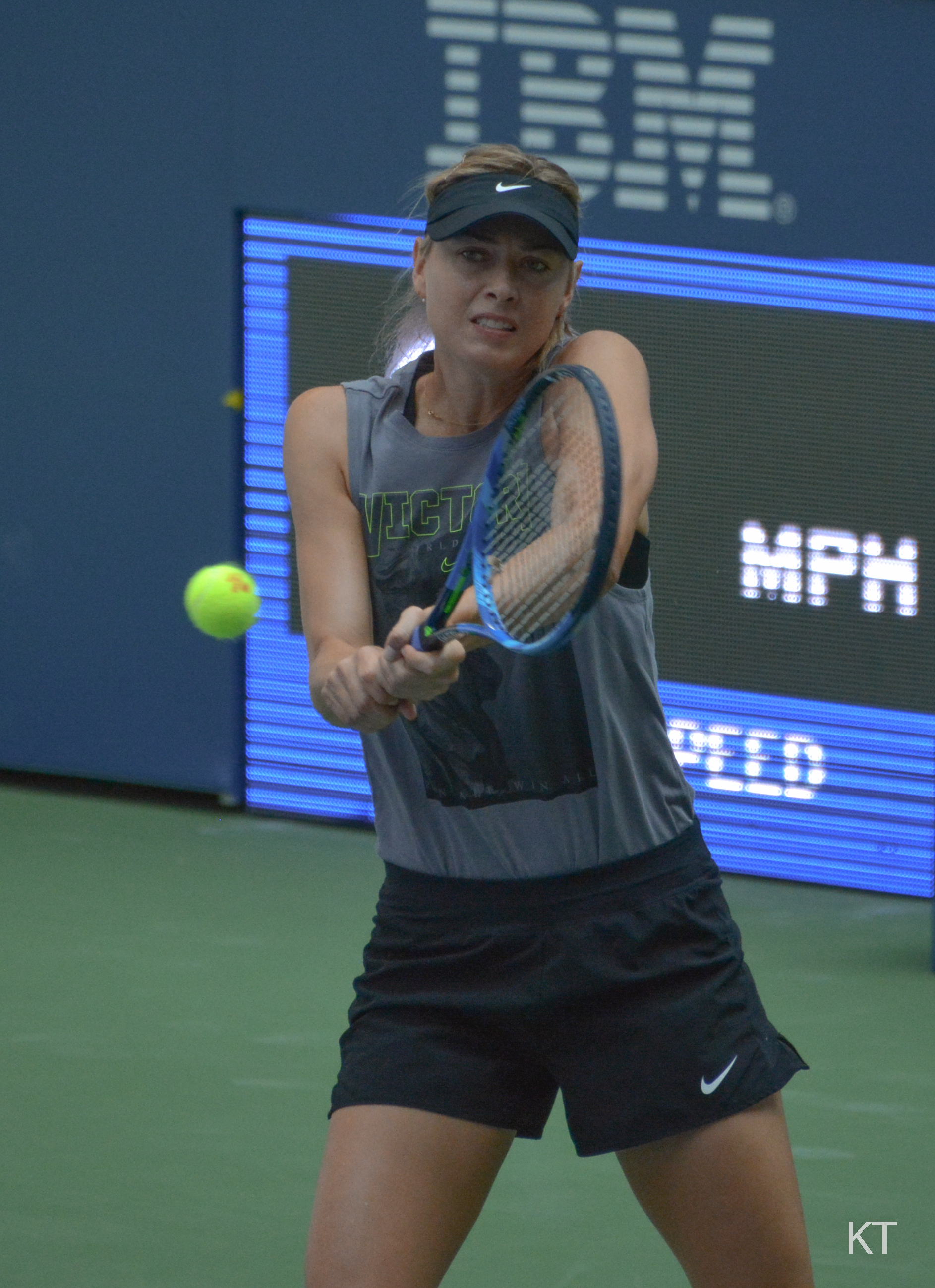
Why Spin Changes Everything
A flat ball hit at 100 km/h and a topspin ball hit at 100 km/h are not the same shot. The flat ball travels in a shallower arc and bounces through at roughly the same height. The topspin ball curves downward more steeply, bounces higher, and accelerates off the court surface. Despite identical pace at contact, the topspin ball is often harder to deal with because it disrupts an opponent's timing and hits a different contact zone.
Spin also provides a crucial strategic benefit: net clearance with margin. A flat drive through the middle of the court must thread the needle between the net and the baseline — a small target window. Topspin creates a higher arc that clears the net comfortably, then dips sharply into the court before the baseline. This allows players to generate high pace with much lower error rates than flat hitting.
The Magnus Effect: Why Spin Works
The physics behind spin in tennis is the Magnus effect — the same force that makes a curveball in baseball curve or a free kick in football swerve. When a spinning ball moves through air, the rotation drags air around the ball's surface. On one side of the ball, the airflow and the surface rotation move in the same direction, accelerating the air and lowering its pressure. On the opposite side, the two movements oppose each other, slowing the air and raising its pressure. The pressure difference creates a net force that pushes the ball toward the low-pressure side.
Topspin Magnus Effect
The top of the ball rotates forward in the direction of travel. Air moving over the top of the ball is accelerated; air under the ball is slowed. The result is higher pressure below the ball and lower pressure above it — the ball is pushed downward, curving into the court faster than gravity alone would pull it.
Backspin Magnus Effect
The reverse of topspin. The bottom of the ball rotates forward. Air is accelerated below the ball and slowed above it. Higher pressure above pushes the ball upward slightly, counteracting gravity. The ball floats on a flatter trajectory and after bouncing, skids low with reduced pace — the signature of a slice shot.
Sidespin Magnus Effect
When the ball spins around a vertical axis, the Magnus force acts horizontally rather than vertically. The ball curves left or right through the air. A wide slice serve uses sidespin to curve away from the receiver. A kick serve combines topspin and sidespin to create a ball that both rises and kicks sideways after the bounce.
Topspin
Topspin is the dominant spin in modern tennis, used by every top professional on both forehand and backhand groundstrokes. The forward rotation of topspin applies downward Magnus force that pulls the ball into the court, allowing players to swing aggressively while keeping a high margin over the net. The result after the bounce is a ball that jumps up and through — often reaching shoulder height or above — which is difficult to attack and uncomfortable for opponents who prefer to strike at waist level.
How to Generate Topspin
Topspin is produced by a low-to-high swing path that brushes up the back of the ball at contact. The key mechanical elements are:
- Swing path: The racket head travels from below the ball to above it through the contact zone. The greater the upward component relative to the forward component, the more topspin is generated.
- Contact point: The strings make contact slightly below the centre of the ball, allowing the racket to brush upward across it rather than driving straight through.
- Racket face angle: Slightly closed (tilted forward at the top) at contact. This is automatically produced by the grip — a semi-western or western forehand grip naturally closes the racket face for topspin.
- Wrist acceleration: A snap or lag-and-release of the wrist through contact multiplies racket-head speed, which directly increases spin rate. Passive wrists produce flat shots; active wrists produce topspin.
- Follow-through: The racket finishes high — over the opposite shoulder on the forehand, high above the contact point on the backhand. The height of the follow-through reflects the low-to-high path that produced spin.
Heavy Topspin vs Moderate Topspin
Not all topspin is created equal. The ratio of forward swing to upward swing determines how much spin is applied relative to pace:
- Heavy topspin (Nadal-style): Extreme low-to-high swing path; very high rpm rotation; ball clears the net by 1–2 metres, bounces to chest or shoulder height. Sacrifices some outright pace for massive safety margin and uncomfortable bounce. Ideal on clay where the ball grips the surface and kicks higher.
- Moderate topspin (Federer, Djokovic style): More balanced forward and upward swing; high pace plus sufficient topspin to keep the ball in court. Ball clears the net by 30–60 cm, bounces at waist to chest height. More versatile on all surfaces and easier to redirect at different angles.
- Control topspin: Used when rallying safely or building the point. Lower racket-head speed, more emphasis on consistency. The upward brush keeps the ball in, but pace is reduced. Useful for neutralising an opponent's attack or keeping the ball deep while recovering position.
Topspin on Forehand vs Backhand
On the forehand, topspin is natural for most grips from semi-western onwards. The arm swings freely in a large arc, generating high racket-head speed and, consequently, high topspin rates. Elite male players hit forehands with 2,500–3,500 rpm of topspin on average.
On the two-handed backhand, the non-dominant hand drives the low-to-high swing. The two hands working together can generate comparable topspin to the forehand. On the one-handed backhand, topspin requires a more deliberate and technically demanding upward brush — players like Federer and Gasquet have exceptional topspin one-handers, but most club players find consistent topspin easier on a two-hander.
Slice
The slice is the counterpart to topspin — a shot hit with a high-to-low swing that imparts backspin on the ball. Where topspin pulls the ball down and makes it bounce up, backspin keeps the ball low after the bounce and reduces its pace. A well-executed slice stays below net height after landing, forcing the opponent to lift the ball up — making attack difficult and increasing the chance of errors into the net.
How to Generate Slice
The mechanics of the slice are essentially the reverse of topspin:
- Swing path: High to low — the racket head travels from above the ball down through contact and continues downward (or forward-and-down) in the follow-through.
- Racket face: Open at contact, tilted backward so the strings face upward. The open face combined with the downward path creates the backspin.
- Contact point: Slightly above the centre of the ball. The strings cut across and under the ball, creating the backspin rotation.
- Compact swing: Unlike topspin which benefits from large, looping swings, the slice uses a shorter, more controlled motion. Excessive swing on a slice usually produces an error-prone floating ball.
- Follow-through: The racket finishes forward and low, often pointing toward the target. The wrist stays firm — excessive wrist flip on a slice causes the ball to sail long.
Defensive vs Offensive Slice
Slice is one of tennis's most versatile shots because it serves very different tactical purposes depending on how it is hit:
- Defensive slice: Used when stretched wide, pulled out of position, or under heavy pressure. A soft, high-arcing slice buys time to recover court position. The ball floats slowly over the net and lands deep, giving the defending player 2–3 extra seconds to reset. Sharapova used this slice extensively when opponents pulled her wide on her backhand side.
- Offensive slice approach shot: Hit with more pace and lower bounce, aimed to a corner. Forces the opponent to scramble and hit upward, giving the approaching player a comfortable volley to put away. The low bounce is particularly effective on grass and hard courts.
- Slice lob: A sliced ball hit with a high, looping trajectory over the opponent at the net. The backspin slows the ball in the air and reduces its bounce after landing, making it difficult to chase down. Less reliable than a topspin lob but effective as a deceptive variation.
- Drop shot slice: An extreme variation where the ball is barely guided over the net with heavy backspin. After the bounce, the ball barely advances — sometimes even spinning back toward the net. Highly effective from the service line; risky from the baseline.
Slice on One-Hander vs Two-Hander
The slice backhand is the natural complement to the one-handed backhand. One-handers produce the slice with a smooth, sweeping high-to-low motion and can generate exceptional ball control and disguise — the same grip and motion setup serves both the topspin one-hander and the slice, making the two shots difficult for opponents to distinguish until contact.
Two-handed backhand players typically have a weaker slice because the two-handed grip must be modified or one hand released to execute the slice properly. Many two-handers use the slice as a purely defensive weapon, releasing the non-dominant hand near contact and slicing with the dominant arm alone. This is less powerful but still effective for neutralising pressure and changing pace.
The Flat Shot
The flat shot contains minimal spin. The racket travels through the ball on a predominantly horizontal path, driving straight through the contact zone with a square or slightly closed face. The ball leaves the strings with very little rotation and travels in an essentially straight line through the air, unaffected by the Magnus effect.
Characteristics of the Flat Shot
- Maximum pace: With no energy going into creating spin, all of the racket's kinetic energy transfers to ball velocity. A flat ball at a given swing speed is measurably faster than a topspin ball at the same swing speed.
- Lowest arc over net: Without the Magnus curve pulling the ball down after clearing the net, the flat ball travels in a flat trajectory. This makes it fast and penetrating — and also the most likely to go long or into the net.
- Shallow, skidding bounce: A flat ball bounces through at roughly the height it arrives — it neither kicks up like topspin nor stays low like slice. On fast surfaces, it can be very difficult to handle at high pace.
- Highest unforced error rate: The flat shot has the narrowest margin for error of all three shot types. Professional players use flat shots selectively — on short balls where the court is wide open, on returns against weak second serves, or as occasional change-of-pace surprises.
When to Hit Flat
- On short balls that land in mid-court — the ball is already inside the baseline, giving you less distance to cover and a lower risk of going long.
- When the court is wide open after moving the opponent off the court — a flat winner into the open space ends the point immediately.
- On second serve returns against a weak kicker — stepping in and driving flat takes the ball before it rises to the uncomfortable kick height.
- As a surprise variation after a long topspin rally — the change in pace and trajectory disrupts the opponent's timing.
The Kick Serve
The kick serve is the most effective second serve in tennis and one of the most technically demanding shots to master. It combines topspin with sidespin to create a ball that not only clears the net with a high margin of safety but also bounces sharply upward and away from the returner after landing. For right-handed servers in the deuce court, the kick bounces up and to the returner's left — into the backhand at an awkward height.
How the Kick Serve Works
The kick serve is produced by swinging up and across the back of the ball, creating a combination of topspin and sidespin. The critical technical differences from a flat or slice serve are:
- Ball toss position: Behind and slightly to the left of the head for right-handed players (the opposite for left-handers). This toss position forces the server to swing up and across the ball rather than through it flat. The toss behind the head is the most common tell that a kick serve is coming — experienced returners watch for it.
- Swing path: The racket brushes up the back of the ball from roughly 7 o'clock to 1 o'clock (on a clock face), creating simultaneous topspin and sidespin. The severe upward brush means the ball clears the net with a large margin — making the kick serve significantly more reliable than a flat second serve.
- Body position: The back arches more on a kick serve than any other serve. This arch stores energy that the kinetic chain releases upward and through the ball at contact.
- Bounce direction: For a right-handed server, the kick bounces to the right (from the server's perspective) — into the returner's backhand in the deuce court. In the advantage court, it kicks away to the returner's forehand side, but the upward kick still disrupts timing.
Left-Handed vs Right-Handed Kick Direction
The kick direction reverses for left-handed servers, which makes left-handed kick serves particularly dangerous. Rafael Nadal, Gael Monfils, and other left-handers can kick the ball into the right-handed opponent's forehand in the deuce court — an unusual angle that most players are less comfortable with at shoulder height. Left-handed kick serves in the advantage court kick hard into the body or backhand, replicating the same torture that right-handers inflict in the deuce court.
Why Kick Is the Best Second Serve
The kick serve solves the central problem of the second serve: how to avoid double-faults without serving a ball the opponent can attack. A flat second serve hit conservatively is slow and sits up in the strike zone — easy prey for an aggressive returner. A kick serve hit at the same conservative pace still bounces to shoulder height or above, disrupting the returner's rhythm and making a clean, flat return extremely difficult. This is why almost every professional player on Tour uses a kick or heavy topspin second serve.
Sidespin
Sidespin is produced when the racket brushes across the side of the ball rather than up or down the back. The ball rotates around a vertical axis, and the Magnus effect curves it horizontally through the air — to the left or right depending on which direction the ball spins.
Sidespin in Serves
The most prominent use of sidespin in tennis is the slice serve. A right-handed server brushing across the right side of the ball (from 3 o'clock to 9 o'clock) imparts sidespin that curves the ball to the right through the air — away from a right-handed returner standing in the deuce court. This wide slice serve is one of tennis's most effective weapons because it stretches the returner off the court, opening up the entire court for the next ball. A well-placed wide slice ace is essentially unreturnable even at the professional level.
The body serve — aimed directly at the returner — also uses sidespin to jam the player, leaving them with no room to take a full swing. The ball appears to be going wide, then curves into the body.
Sidespin in Volleys and Slices
Slice volleys and slice approach shots often contain a component of sidespin alongside backspin, produced when the racket cuts across the ball from outside-in as well as high-to-low. This combination makes the ball both stay low after the bounce and curve away from the opponent, making it particularly difficult to pick up when playing a passing shot. The angled slice volley — hit crosscourt with combined sidespin and backspin — is one of the most effective put-away shots in doubles tennis.
Reading Your Opponent's Spin
Identifying what spin an opponent is using before the ball reaches you is one of the most valuable skills in tennis. It allows you to adjust your footwork, racket preparation, and contact point in the fraction of a second between the opponent's contact and the ball reaching your side of the court.
Watching the Racket Head Path
The racket head tells you everything. Before the ball even leaves the opponent's strings, the swing path predicts the spin:
- Low to high follow-through: Topspin. Prepare for a high-bouncing ball — move back slightly and load for contact at shoulder height.
- High to low follow-through: Slice or backspin. Move in — the ball will stay low. Bend your knees to get under the ball; contact will be at or below knee height.
- Horizontal follow-through: Flat shot or minimal spin. The ball will bounce through at roughly the same height, with pace.
- Across-the-body path (serve): Slice serve. The ball will curve away — move wide earlier than you normally would.
- Upward, behind-head path (serve): Kick serve. Expect the ball to bounce high — step back and prepare for contact above shoulder height, or move in aggressively before it rises.
Return Adjustments by Spin
Reading the serve's spin type is half the battle; making the correct positional and technical adjustment is the other half.
- Returning the kick serve: Two valid strategies. Moving in before the ball rises (standing inside the baseline, taking the ball on the rise) neutralises the kick before it reaches its peak. Alternatively, moving well behind the baseline gives more time to let the ball descend to a comfortable height — but gives up court position. Most professionals use the former against moderate kick, the latter against extreme kick.
- Returning the slice serve: Move laterally early — the ball will curve further than it appears. Keep the racket face slightly open on the return to compensate for the backspin; a closed face will drive the ball into the net.
- Returning heavy topspin groundstrokes: Move back from your normal position, load for a high contact point, and either drive through the ball with an abbreviated swing or use the opponent's pace with a block or slice return to redirect it.
Generating More Spin: Practice Drills
Spin is a skill that develops through deliberate repetition of the correct mechanics. These drills isolate the sensations of spin production so that the correct patterns become automatic.
The Brush-Up Drill
Stand at the service line with a basket of balls. Using only forearm and wrist, brush up the back of each ball with a sharp, vertical upward motion — no full swing. The goal is to feel the strings gripping and rolling up the ball's surface. A well-executed brush produces a ball that rotates clearly as it rises. This drill isolates the contact sensation of topspin production and is the most effective way to teach beginners what topspin actually feels like on the strings.
Slow-Motion Topspin Contact
Hit full forehand groundstrokes at 30–40% of normal swing speed, exaggerating the low-to-high path dramatically. Watch the ball leave the strings and observe the rotation. At slow speed, the spin is visible — the ball visibly rolls forward. Gradually increase swing speed while maintaining the same path. This bridges the gap between knowing the mechanics intellectually and executing them under match pace.
Spin Control Targets
Set up two targets: a cone or marker close to the net (3–4 metres past it) and one at the baseline. From the baseline, hit topspin balls that clear the net by at least a metre and land near the far baseline. The constraint of hitting high over the net while still reaching the baseline forces you to generate real, functional topspin — not a half-hearted brush. Track how many consecutive balls you can land in the deep target zone.
Slice Feel Drill
Stand at mid-court. Hold the racket with an eastern or continental grip, open the face, and hit gentle slice shots crosscourt with barely any swing — almost a guiding motion. The ball should float with visible backspin and land short with a very low, slow bounce. Once you can feel the open-face, high-to-low contact clearly, move back to the baseline and gradually add pace. The key sensation to preserve is the cutting feeling — strings sliding under the ball rather than pushing through it.
When to Use Each Spin
Spin selection is a tactical decision as much as a technical one. The following table summarises the best spin choice for each common match situation:
| Situation | Best Spin | Reason |
|---|---|---|
| Cross-court baseline rally, neutral position | Moderate topspin | Safety margin over net, depth, consistent pace to build rally |
| Attacking a short ball in mid-court | Flat or light topspin | Maximum pace into open court; ball already inside baseline reduces long error risk |
| Opponent at the net after approach | Heavy topspin passing shot | Ball dips at the volleyer's feet rather than sitting up for an easy put-away |
| Stretched wide on backhand side | Defensive slice | Buys recovery time; low bounce prevents opponent from attacking |
| Approach shot to the net | Slice or flat | Slice stays low and forces the opponent to hit upward; flat goes through fast |
| Second serve | Kick (topspin + sidespin) | High margin over net, uncomfortable bounce height, difficult to attack |
| Wide serve (deuce court, right-hander) | Slice serve (sidespin) | Curves away from returner, opens court for next shot |
| Opponent behind baseline hitting heavy topspin | Heavy topspin reply or slice change of pace | Topspin extends the rally safely; slice disrupts rhythm with low bounce |
| Forcing a net-rusher on grass | Low flat or slice | Ball stays below net height at the net player's feet; forces a difficult low volley |
| Opponent dislikes high balls (short player) | Heavy topspin to the backhand | Ball rises above comfortable contact zone; forces defensive reply |
| Clay court rally construction | Heavy topspin | Clay grips the ball and amplifies the kick; opponent is pushed further behind baseline |
| Grass court quick exchange | Flat or slice | Grass keeps the ball low naturally; topspin kick is less pronounced; flat penetrates faster |
Frequently Asked Questions
How do I generate more topspin on my forehand?
Topspin comes from the swing path (low to high, brushing up the back of the ball) and wrist acceleration at the contact point. Drop your racket head below the ball before you swing, then drive upward and forward through contact. Squeeze the grip slightly at impact to stabilise the wrist. Practice slowly at first — feel the brush before adding pace.
Is topspin always better than hitting flat?
No. Heavy topspin provides more margin and bounce but less pace. Flat shots are faster but have lower margin over the net. The best players vary spin levels constantly — heavy topspin for high-percentage crosscourt rallies, flatter shots when attacking a short ball, slice to change the rhythm. Use topspin as your default; flat as a weapon when the opportunity is right.
How do I hit a kick serve?
Toss the ball slightly behind your head rather than in front. Use a continental or eastern backhand grip. Swing up and across the ball (from low-left to high-right for a right-hander) — this creates simultaneous topspin and sidespin. The ball bounces high and kicks away from your opponent. Start slowly, focusing on brushing up the back of the ball.
What spin does Sharapova use on her groundstrokes?
Sharapova used primarily moderate topspin on her groundstrokes rather than heavy RPM topspin. Her game was built around pace and penetration — flat, driving groundstrokes that pushed opponents deep. She used more topspin on clay to adapt to the surface, and her slice backhand was a key defensive tool when stretched wide.